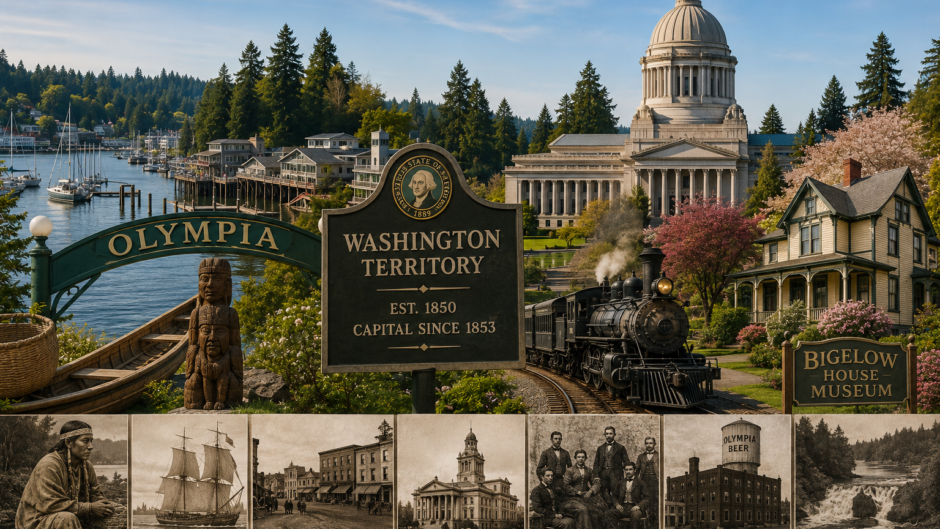
Olympia, Washington, is best known as the state capital, but its history reaches far beyond government buildings and legislative offices. Located at the southern end of Puget Sound, Olympia grew from an Indigenous homeland and small waterfront settlement into a center of politics, trade, education, and culture.
The city’s past includes Native American history, early exploration, frontier settlement, territorial government, railroad development, brewing, environmental activism, and historic preservation. These stories help explain why Olympia feels different from larger Washington cities such as Seattle and Tacoma. It may be compact, but its history is remarkably rich.
Olympia Was an Indigenous Homeland
Long before Olympia was established as a town, the area was home to Indigenous peoples. The southern Puget Sound region supported communities that depended on the area’s forests, rivers, wetlands, shorelines, and abundant food resources.
The Steh-Chass people, also spelled Stehchass in some historical sources, lived in the area now associated with Olympia. Nearby waterways and lands were also used by the Nisqually, Squaxin Island, Puyallup, and other Coast Salish peoples. Fishing, hunting, gathering, trade, and seasonal travel were central parts of life in the region.
Budd Inlet and the surrounding waterways made the location especially valuable. The inlet provided access to Puget Sound, while nearby rivers and forests offered transportation routes and natural resources. These geographic advantages later attracted settlers and businesses, but they had already supported Indigenous communities for thousands of years.
The arrival of American settlers brought major changes. In the 1850s, territorial officials negotiated treaties with Native nations in the Puget Sound region. The Treaty of Medicine Creek was signed in December 1854 after negotiations led by Isaac Ingalls Stevens, the first governor of Washington Territory. The treaty involved representatives of several Native communities, including the Nisqually, Puyallup, Squaxin, and Steh-Chass.
Although the treaty included provisions recognizing certain fishing, hunting, and gathering rights, it also required Native communities to surrender large areas of their traditional lands. The treaty process caused lasting conflict and displacement. The story of Olympia’s development cannot be fully understood without recognizing this difficult and often painful part of its history.
The First Permanent Settlers Arrived in the 1840s
American settlement in the Olympia area began before Washington Territory officially existed. Historical records identify Thomas Otchin as one of the first permanent settlers in what is now Olympia, arriving in the early 1840s. Other settlers soon followed, drawn by the area’s natural harbor and access to Puget Sound.
The settlement was first known by names connected to the local landscape. One early name was Smithfield, while another was known as Smithter. In 1850, the community became known as Olympia.
The name “Olympia” was inspired by the Olympic Mountains, which can be seen across Puget Sound on clear days. The mountains had already been named by earlier explorers, who associated them with Mount Olympus from Greek mythology. Local settlers adopted Olympia as the community’s name, giving the young town a memorable connection to the surrounding landscape.
In its early years, Olympia was a small frontier settlement. Roads were limited, travel was difficult, and many buildings were simple wooden structures. Even so, the town had a major advantage: its location along the water. Ships could bring supplies, carry mail, and transport timber and other products to communities around Puget Sound.
Olympia Became the Territorial Capital in 1853
One of the most important facts about Olympia is that it became a capital almost immediately after Washington Territory was created. On November 28, 1853, Territorial Governor Isaac Stevens proclaimed Olympia the capital of the new territory. At the time, the community had only about 100 residents.
This decision shaped Olympia’s future. Government offices, lawmakers, lawyers, merchants, newspaper publishers, and other professionals began arriving in the growing settlement. Being the seat of government gave Olympia an economic advantage over many nearby communities.
The capital was not simply a ceremonial title. Government activity created jobs and attracted businesses. Hotels, banks, shops, offices, and transportation services developed around the needs of lawmakers and visitors. Olympia’s political importance helped it survive and grow even when other settlements competed for regional influence.
The city has remained Washington’s capital from the territorial period to the present day. This makes Olympia one of the longest-continuously operating political centers in the Pacific Northwest.
Olympia Was Incorporated in 1859
Although Olympia had already become an important settlement and political center, it was not officially incorporated until January 28, 1859. The Territorial Legislature formally incorporated the town on that date.
Incorporation gave Olympia a more organized local government and helped establish the legal structure needed for a growing community. The town could better manage streets, public services, property matters, and local business activity.
During this period, Olympia remained a small frontier town, but its role as the territorial capital gave it influence beyond its size. It was becoming a place where regional decisions were made and where people from across the territory came to conduct business.
The city’s waterfront also continued to play an important role. Before modern highways and railroads connected communities across the region, water transportation was often the quickest way to move people and goods. Olympia’s position on Budd Inlet allowed it to participate in the wider Puget Sound economy.
The City Played a Role in Washington Statehood
Washington Territory eventually became the state of Washington on November 11, 1889. Olympia remained the capital after statehood, continuing the role it had held since 1853.
Statehood brought new responsibilities. Olympia needed larger government facilities, better transportation, and expanded public services. The constitutional convention also increased the city’s importance as delegates gathered to create the framework for the new state government.
The transition from territory to state helped transform Olympia from a frontier capital into a more established city. New offices, commercial buildings, schools, churches, and homes appeared as the population grew.
The capital’s continued location in Olympia was not always taken for granted. Washington’s larger cities had greater populations and stronger commercial economies, but Olympia’s long political history and central position in the territory helped it retain the capital.
The Old Capitol Building Has a Long History
One of Olympia’s most recognizable historic structures is the Old Capitol Building. The building was completed in the 1850s and originally served as a county courthouse before becoming associated with territorial and state government.
The building later became Washington’s capitol and housed government offices for many years. It was eventually replaced by the larger Legislative Building on the Capitol Campus. Even after it stopped serving as the main seat of government, the Old Capitol remained an important landmark.
The building’s history reflects Olympia’s transition from a small settlement to a state capital. Its architecture and location remind visitors that government in Washington began in modest surroundings rather than in the grand buildings seen today.
The Old Capitol also demonstrates how historic buildings can be reused. Instead of disappearing as the city expanded, it remained part of Olympia’s public landscape and continued to represent the city’s early political history.
The Washington State Capitol Campus Defines the City
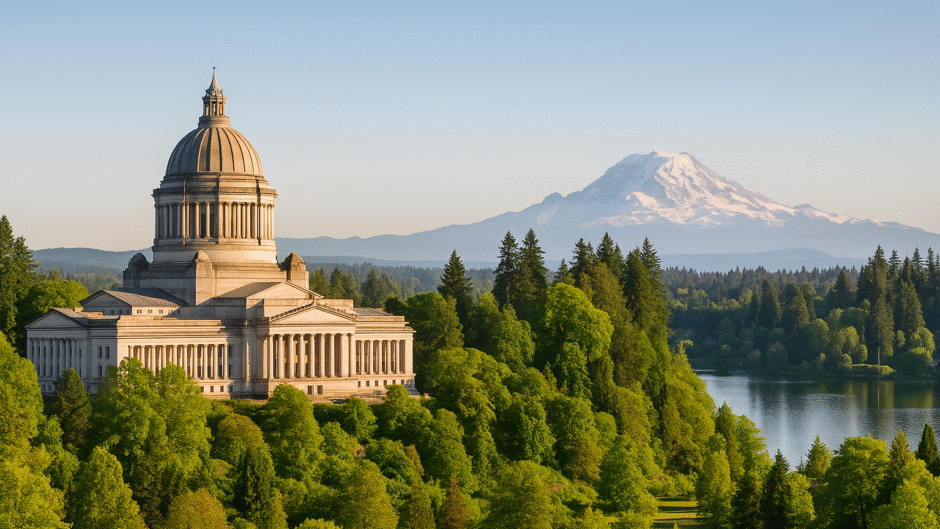
The Washington State Capitol Campus is one of Olympia’s most important historic areas. It includes the Legislative Building, offices, monuments, landscaped grounds, and other structures connected to state government.
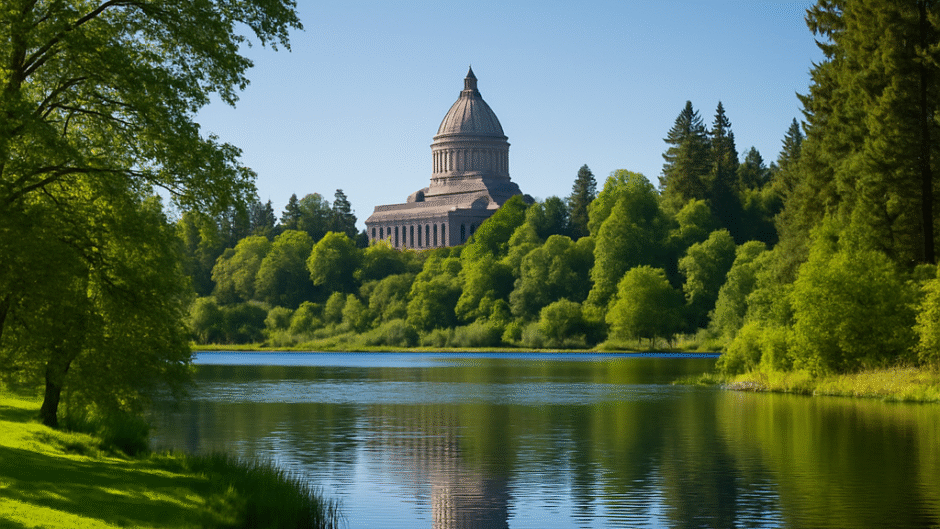
The Legislative Building is especially famous for its large dome. Construction began in the early twentieth century, and the building was completed in 1928. Its dome became one of the most recognizable architectural features in Washington.
The Capitol Campus was planned to create a formal setting for state government. Its broad lawns, pathways, trees, and monumental buildings contrast with Olympia’s older downtown streets. Together, these areas show different stages of the city’s development.
The campus is not only a workplace for lawmakers. It is also a public space where residents attend events, visit memorials, walk through gardens, and observe the state government in operation. For many visitors, touring the Capitol Campus is one of the easiest ways to experience Olympia’s history.
Olympia’s Waterfront Supported Trade and Industry
Water shaped Olympia’s economy for generations. Budd Inlet connected the city to Puget Sound, making it possible for boats to carry passengers, food, construction materials, timber, and other goods.
The waterfront supported warehouses, docks, mills, and commercial businesses. Timber was one of the region’s most important industries, and forests around southern Puget Sound supplied raw materials for construction and manufacturing.
Olympia also became known for oyster harvesting and seafood. The shallow waters and tidal areas around Puget Sound provided resources that supported both Indigenous communities and later commercial industries. Oyster businesses became an important part of the local economy during the nineteenth and early twentieth centuries.
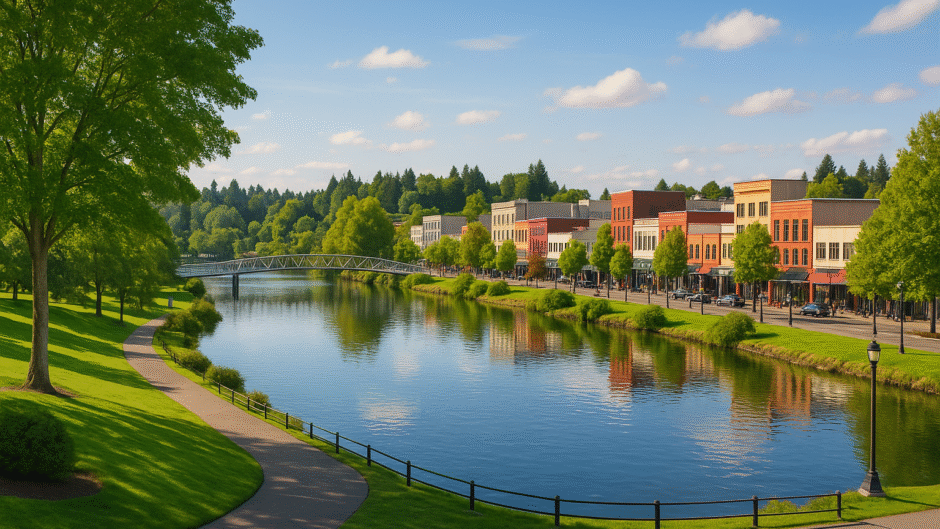
As roads, railroads, and trucks became more important, the waterfront’s role changed. Some industrial activities declined, while parts of the shoreline were redeveloped for public use, offices, parks, and cultural attractions. Today, Olympia’s waterfront still reflects the city’s relationship with the water, even though its economy is no longer based primarily on docks and shipping.
Olympia Brewing Began in Tumwater
A major chapter in the area’s industrial history is connected to the Olympia Brewing Company in nearby Tumwater. The brewery was founded by Leopold Schmidt in 1896. Its location benefited from the region’s clean water and transportation connections.
The brewery became famous for Olympia Beer, which was marketed with the slogan “It’s the Water.” The brand became widely recognized throughout the Pacific Northwest and helped make the Olympia name familiar far beyond the capital city.
The brewery complex grew into a large industrial site. Its buildings, equipment, workers, and distribution network had a significant effect on the local economy. For decades, brewing was one of the region’s most visible industries.
Although the brewery eventually closed, the site remains historically important. The former brewery grounds are a reminder of the way local natural resources, transportation, advertising, and manufacturing came together to create a regional brand.
Railroads Changed Olympia’s Growth
Rail transportation brought another major change to Olympia. Railroads connected the city more efficiently with other communities in Washington and the Pacific Northwest. This made it easier to transport products, receive supplies, and travel overland.
Before rail connections improved, Olympia depended heavily on water routes. Rail service gave local businesses another way to reach markets and helped the city participate in a wider regional economy.
Railroads also encouraged residential and commercial growth. Workers, merchants, government employees, and families could move to the area more easily. Goods that once took considerable time to arrive by ship could be transported more quickly.
The arrival of rail did not eliminate the importance of the waterfront, but it changed how the two systems worked together. Ships and railroads became complementary forms of transportation, helping Olympia maintain its position as a regional center.
Historic Homes Reveal Olympia’s Everyday Past
Government buildings often receive the most attention, but Olympia’s historic homes reveal how ordinary families lived during the city’s early years. Neighborhoods near downtown contain examples of Victorian, Craftsman, and other architectural styles.
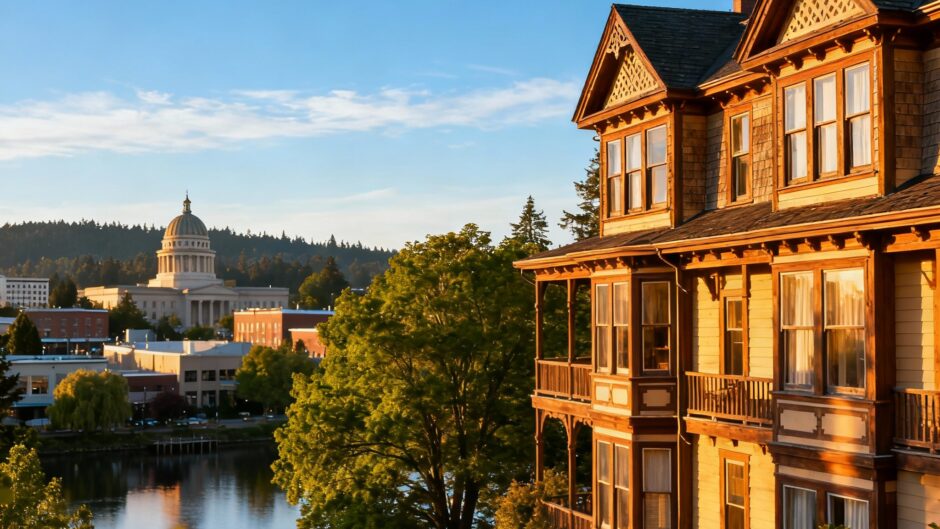
The Bigelow House is one of Olympia’s best-known historic homes. Built in the 1850s for Daniel and Ann Bigelow, it is considered one of the oldest surviving residences in Olympia. Daniel Bigelow was involved in law and politics, while Ann Bigelow became known for her work in education and civic life.
The home provides a look at domestic life during Olympia’s territorial period. Its rooms, construction methods, and surviving features help visitors imagine a time when the city was still developing as a frontier capital.
Historic neighborhoods also show the city’s gradual expansion. Houses were built for government workers, business owners, teachers, craftsmen, and other residents. Preserving these structures helps keep Olympia’s history connected to real people rather than only to major political events.
Olympia’s History Includes African American Settlement
The wider Olympia region is also connected to the history of George and Isabella Bush, an African American couple who settled in the Puget Sound area during the 1850s. The Bush family established a homestead near Tumwater and became part of the region’s early settlement history.
George Bush was a successful farmer and entrepreneur. The family’s move west was influenced partly by racial discrimination and restrictions they faced elsewhere. Their homestead became a place where the family could build a life and contribute to the developing community.
The Bush family’s story is significant because it challenges the idea that early Washington was settled only by white pioneers. African Americans, Native peoples, immigrants, women, laborers, and many other groups all shaped the region’s history.
Their experience also highlights the complicated legal and social conditions of the nineteenth century. Washington’s early laws and settlement policies often reflected racial exclusion, but families such as the Bushes still established communities and left a lasting mark on the region.
Olympia Has a History of Civic Activism
Olympia has long been associated with civic participation and political awareness. Its status as the state capital naturally brings public debates, demonstrations, hearings, and community organizing.
During the twentieth century, residents became active in efforts involving environmental protection, historic preservation, civil rights, labor issues, and local government. The city’s relatively small size made it possible for community groups to influence public discussions directly.
Olympia also developed a reputation for alternative arts and culture. Independent bookstores, music venues, cooperatives, artists, and nonprofit organizations contributed to a distinctive local identity.
This culture grew alongside the city’s government role. Olympia is both a formal political center and a community known for grassroots activity. That combination continues to shape the city’s character.
Historic Preservation Protects Olympia’s Identity
As Olympia grew, residents and preservation groups worked to protect important buildings and neighborhoods. Historic preservation helps maintain the physical evidence of the city’s past, including old homes, commercial blocks, public buildings, and industrial sites.
Downtown Olympia contains structures that reflect different periods of development. Some buildings date from the nineteenth century, while others represent early twentieth-century commercial growth. Their designs show changes in building materials, transportation, business practices, and architectural taste.
Preservation also helps maintain a sense of place. A city made entirely of new construction can lose the visual clues that explain how it developed. Olympia’s older buildings allow visitors to see layers of history in a relatively small area.
The Olympia Historical Society and Bigelow House Museum, along with local preservation organizations, have helped document the city’s historic places. The community’s historical resources include hundreds of locations and buildings throughout Olympia.
Why Olympia’s History Matters
Olympia’s history is not just a list of dates. It is a story about geography, Indigenous cultures, political power, transportation, industry, immigration, and community action.
The city became important because of its location on Puget Sound, but geography alone does not explain its survival as Washington’s capital. Olympia’s early leaders secured a political role, residents built businesses, and generations of people created neighborhoods and institutions.
At the same time, the city’s past includes serious conflicts. Indigenous lands were taken through treaties and settlement, racial exclusion influenced local development, and economic growth often changed the shoreline and natural environment. Understanding these parts of the story creates a more complete and honest picture of Olympia.
Today, visitors can see this history in the Capitol Campus, Old Capitol Building, historic homes, downtown streets, waterfront areas, museums, and nearby Tumwater landmarks. Olympia may be Washington’s smallest major capital city, but its historical footprint is much larger than its size suggests.